FAQs
1. What can I do to help butterflies and other pollinators?
-
Plant native plants in your yard!
If all of us plant just a few native plants in our yards, it will vastly increase the amount of habitat available to all the pollinators and other beneficial insects we want to support. Even in a small yard, a few wildflowers could be planted, or when your current shrubs need to be replaced, choose native alternatives to replace them. Every bit helps!
- Get rid of your lawn, or at least shrink it a bit!
The vast swaths of turf favored by American suburbanites do not support any wildlife at all; require large amounts of chemicals in the form of fertilizers, insecticides and weed killers to maintain; require large amounts of water to keep green; require large amounts of energy on the part of the homeowner to maintain; put CO2 into the environment from the lawnmowers we use to keep them trim; and most lawns are unused space for the average homeowner. Consider converting at least some of your lawn into a shrub island or a perennial border. The birds and butterflies will love you!
- Avoid using chemicals in your yard.
Pesticides are not selective; they kill the beneficial insects as well as the pests. By killing off the insect predators, you leave your whole yard ecosystem open to later attack and start a vicious cycle of more and more chemical use. When you see your plants getting nibbled, wait a bit and see if nature can control it for you.
Fertilizers, if overused, can run off into our water supply and cause algae blooms that injure the fish and other aquatic dwellers. Consider using compost, getting your soil tested so you only add what you really need, and by planting native plants in their own habitat, reducing your need to modify the existing soil for finicky exotics.
Herbicides are a controversial topic; many think they are very toxic, other experts say they are not. The surfactants, chemicals added to make the herbicide stick to the leaves of the plants, may be the culprits. Try and minimize herbicide use with mulching, pulling weeds before they go to seed, and using a cut-and –paint approach where you directly apply it to specific plants to minimize how much you are applying.
- Spread the word!
Butterflies, honeybees, songbirds, and many other wildlife species around the world are suffering from loss of habitat from urban sprawl. If we all work together, we can improve their chance of survival and make the world a better place for ourselves at the same time.
- Interested in learning more?
Read Dr. Doug Tellamy’s book, “Bringing Nature Home”.
Yes, within reason. In a balanced ecosystem, as we are trying to create, insect herbivores such as caterpillars will eat the plants but will be kept in control by insect predators and birds so the plants will not be destroyed. We may have ratty looking leaves for a little while, but the plants will survive just fine and we will have allowed butterflies and moths to be born!
3. My plants are getting eaten too much. Is there any harm in using pesticides to eliminate the bad bugs?YES! Spraying insecticides eliminates the insect predators, such as ladybugs and leatherwings, as well as the bad insects, and may make your problem worse in the long run. Options other than pesticides include handpicking off the bad bugs (works well for tomato hornworms, for example; put them in a dish where birds can eat them and you’ll be loved forever!), spraying the bugs off with water (works well with aphids), horticultural oil (which coats the insects in an oily coat and prevents them from breathing, but doesn’t leave a harmful residue) or insecticidal soap/mild detergent spray. The NCBG has useful information on Environmentally Responsible Gardening Practices http://ncbg.unc.edu/pages/10/#insects .
4. What is the best way to keep the weeds out of my garden? What is the difference between a weed and a wildflower or native plant anyway?Many of our plants can be found in both wildflower and weed books of the southeastern US. The answer is that the definition is in the eye of the beholder, and it depends on what your goal is. Some native plants can be aggressive, that is they spread actively by seeds or runners from where you first planted them, or volunteer in your yard from unknown origins; such plants may not be appropriate in your garden or if you have a more natural setting, you may welcome them. Foreign plants that invade our natural areas and significantly alter the ecosystems are termed invasive, and they have been rated by their aggressiveness (the list of plants deemed invasive in North Carolina can be seen here: http://www.ncwildflower.org/invasives/list.htm ). If you have undesirable plants in your yard, your first line of defense is to pull them out by hand before they have gone to seed, and to mulch well. The botanical garden has more environmentally friendly suggestions if those aren’t sufficient: http://ncbg.unc.edu/pages/10/#weeds_and_invasive_plants.
5. Why do you have non-native plants in your garden?We confess that we do have several non-native plants in our garden, because there is no need to be fanatical. If there is a non-native plant that you really love, and it is not an invasive or harmful species, then plant one. We have butterfly bush, because it attracts butterflies so well, and rosemary, because its smell tends to discourage deer and because the native bees love its flowers in the spring. Next spring we are going to plant a lantana variety that is perennial called “Miss Huff” because it is an amazing nectar source and butterflies flock to it.
Butterfly Questions:
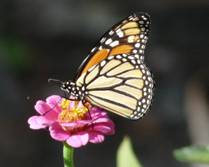
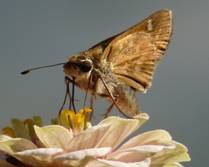
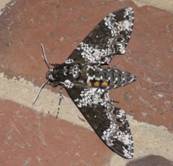
1. What is the difference between a butterfly, a skipper and a moth?All three of these creatures belong to the order of insects Lepidoptera, or insects with scales on their wings. Butterflies, in general, have clubbed antennae, smooth narrow bodies, fly during the day, rest with their wings up, and pupate as a chrysalis; many are brightly colored. Moths, in general, have feathery antennae, fat furry bodies, fly mostly at night, rest with their wings down, and pupate as a cocoon; many are camouflaged in shades of brown and grey to rest on bark or the ground. Skippers are often thought of as butterflies, but share characteristics of both groups – they generally have clubbed antennae and fat, furry bodies, rest with their wings open or half-furled, and often pupate in a thin casing of silk.
 |
 |
 |
||
Monarch butterfly |
Skipper |
Rustic Sphinx Moth |
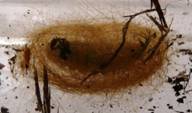
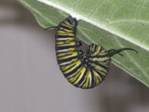
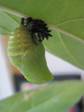
How does the caterpillar form either one? A chrysalis is bare, a cocoon is covered in fine silk. See photo examples. Inside the woven covering of the cocoon, the pupa looks much the same as a chrysalis. The caterpillar usually attaches itself to a twig or wherever it has chosen to pupate, then rests in that position for up to several hours, preparing. It then splits out of its skin from the mid back. In the photo of the monarch chrysalis, you can see the remnant of shed skin by the stem the chrysalis is hanging from.
 |
 |
 |
||
Yellow bear/Virginia tiger moth cocoon |
Monarch caterpillar preparing, then chrysalis |
|||
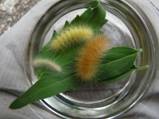
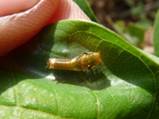
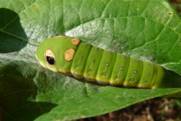
Caterpillars grow by shedding their skin, usually five times between hatching and pupating. Many species change their appearance drastically from the first “instar” or stage that hatches from the egg, and the fifth, or last, instar before pupating. Examples:
 |
 |
 |
||
Yellow bears, 3 stages |
Spicebush swallowtail, first instar |
Spicebush swallowtail, fourth instar |
Bee and Wasp Questions:
1. Will the flowers to attract butterflies also attract bees?Yes and no. In general, bees prefer flowers that are purple or blue, and most butterflies prefer flowers that are yellow, orange or red. However, that is a broad generalization and you will see both bees and butterflies at every kind of plant. Some have specific preferences based on how deep into the flower the nectar in stored and how much pollen is produced. Many flowers have specific pollinator insects, and if that pollinator disappears, so does that plant.
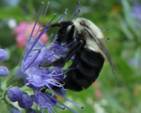
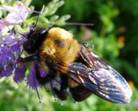
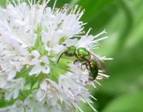
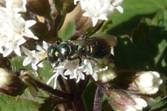
2. What kinds of bees might I see?In addition to honey bees, you will commonly see several kinds of bumble bees, Eastern carpenter bees, green sweat bees and perhaps a small blue-ish bee called an orchard mason bee. None of these are aggressive and if you leave the bees alone, they’ll leave you alone, that is, look but don’t touch and you won’t get stung.
 |
 |
 |
 |
|||
Bumblebee |
Eastern Carpenter bee |
Green sweat bee |
Mason bee |
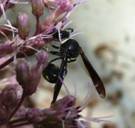
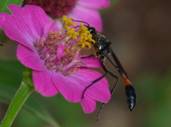
There are many insects that prey on other insects, and these include the 110,000 species of predatory and parasitic wasps in the world. Most people hear “wasp” and think of yellow jackets and angry hornets, and we agree that those are nasty. However, the majority of wasps are quiet, unassuming insects that you will never notice unless you look for them, and they are not aggressive unless actively harassed or stepped on. Many are important pollinators, and many lay their eggs directly in caterpillars or other insect hosts, helping the balance of nature in your garden. If you are interested in learning more, we suggest reading Eric Grissell’s excellent book “Bees, Wasps and Ants – the Indispensable Role of Hymenoptera in our Gardens”.
 |
 |
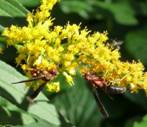 |
Local wasps enjoying the flowers in a home garden.
4. What kinds of animals can pollinate plants?People usually think of honey bees when they think of pollination, because they know farmers bring in honey bees to pollinate their fruit trees and vegetable crops. However, there are many, many other animals that pollinate flowers. These include other species of bees, such as carpenter bees, bumble bees, sweat bees and mason bees; flies of many different types and sizes; beetles; as well as our favorites, the butterflies and moths. Many deep, tubular flowers are pollinated by hummingbirds. Flowers are often designed with their specific pollinator in mind, with color, scent, shape, and placement of the nectar and pollen all set up to maximize their attractiveness and the efficiency of pollination.
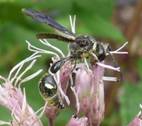
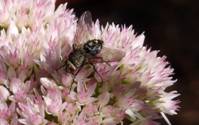
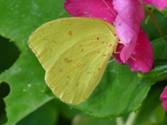
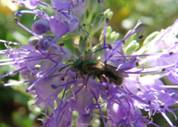
5. What does pollinate mean, anyway?Pollen is not just designed to make you sneeze. It is produced by the male part of the flower, and is the plant equivalent of sperm. The pollen must make its way to the pistil, or female part of the flower, ideally NOT on the same flower or even on the same plant. Plants have devised many strategies to accomplish this. Some use wind, such as trees in the spring, which is where that layer of yellow crud on your car comes from in Chapel Hill in March or so, or like ragweed in the fall which causes most of fall hayfever symptoms. Most plants that are wind pollinated do not have showy flowers – the beautiful goldenrod you see in the fall is not what is making you sneeze; the ragweed is barely distinguishable from a grass yet fills the air with pollen. Plants that are pollinated by insects generally have nectar to attract their pollinator, with the anthers holding the pollen set up to rub on the insect as it drinks. The insect then carries the pollen to the next flower it visits.
 |
 |
|
Notice the pollen all over this wasp. |
Flowers pollinated by flies tend to be flat |
|
 |
 |
|
Cloudless Sulphur can reach deep into flower |
Flowers pollinated by bees tend to be purple. |