Our Garden
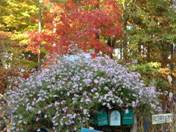
Our garden is planted with predominantly native plants. The few foreign plants that we have are non-invasive and are either excellent nectar sources for adult butterflies (butterfly bush and blue mist shrub) or were selected for another purpose (rosemary and marigolds to repel deer). Most are native to NC, although some are native to the eastern US but not to NC, or to other parts of the US altogether. This is indicated on the table that follows.
The table shows a photo of each plant, along with the common name, the scientific name, and whether the plant provides nectar for adult butterflies and/or hummingbirds, and whether it is a larval food source for caterpillars. Although butterfly caterpillars are generally identified by their adult species name, moths are often named by their caterpillar, ie the tobacco budworm moth, or the wooly bear caterpillar moth. Thus under “Larval for…” you will find names that sound like caterpillars with looper or geometer (for inchworms) or worm. Many say “and others”, because many caterpillars eat a variety of native herbaceous plants in a given family and we don’t have comprehensive lists for all. Virginia tiger moth, the adult of the yellow bear caterpillar, has been added to many lists because we have personally found it on those plants at the garden.
The scientific name contains a link to a website to get more information about that plant. That site may be the Lady Bird Johnson Wildflower Center, the USDA Plant Database, the Floridata website, or in a few cases to the Niche Garden website where we got the plant if it is a named cultivar. The plants are organized first by plant type (Shrub, Perennial and Vine), and then alphabetical by plant family name, and within each plant family, they are alphabetical by scientific name.
Shrubs
|
Plant |
Common Name |
Scientific Name |
Description |
Wildlife Use |
|
New Jersey Tea |
Ceanothus americanus, |
3 ft high, deciduous shrub, spring bloom, Native in US east of Rockies, incl. NC |
Nectar; Larval for Spring Azure, Summer Azure, Cleft-headed looper, Crocus geometer, other loopers,Unicorn caterpillar |
|
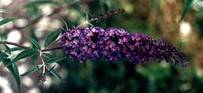
Butterfly bush, Petite indigo |
Buddleia davidii, aka Buddleja davidii, |
Not native, this variety only gets 4’ high, buddleia comes in many colors |
Nectar attracts large numbers of butterflies, but no caterpillars feed on it. Grasshoppers do though, in my experience. |
|
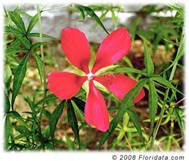
Swamp mallow, Scarlet rose mallow, Scarlet hibiscus |
Hibiscus coccineus |
Shrubby perennial, dies back completely, bloom summer and fall. Likes moist, watery soil; 5-7 lobed leaves; Native to east US |
Nectar; ; Larval for common checkered skipper and other spread wing skippers; Larval for Io moth, Glossy black Idia, Yellow Scallop Moth; also for Hibiscus Sawfly larva of a small wasp, not a caterpillar, but eats leaves) |
|
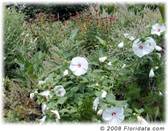
Swamp mallow, Swamp hibiscus, Rose mallow |
Hibiscus moscheutos |
Unlobed leaves; ours has orange flower; summer bloom, large flowers, Native to east US |
Nectar; ; Larval for common checkered skipper and other spread wing skippers; Larval for Io moth, Glossy black Idia, Yellow Scallop Moth; also for Hibiscus Sawfly larva of a small wasp, not a caterpillar, but eats leaves) |
|
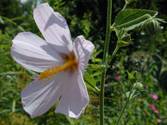
Seashore Mallow |
Kosteletskya virginica |
Native to coastal plain from FL to MD, pink flowers, fall blooms, likes moist soil, sand |
Nectar for butterflies and hummingbirds; not deer resistant; Larval for common checkered skipper and other spread wing skippers; Larval for Io moth, Glossy black Idia, Yellow Scallop Moth; also for Hibiscus Sawfly larva of a small wasp, not a caterpillar, but eats leaves) |
|
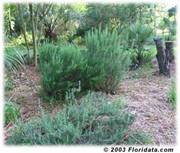
Rosemary |
Rosemarinus officianalis |
Not native, aromatic herb |
Loved by bees; planted to repel deer from garden |
|
Virginia sweetspire |
Itea virginica ‘saturnalia’ |
White, summer blooms; red fall foliage; native to NC and east US |
Nectar source. |
|
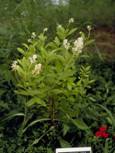
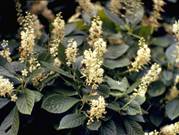
Coastal sweet pepperbush |
Clethra alnifolia |
4-5 ft, white flowers, early to mid summer |
Nectar; larval for large lace borer and unicorn caterpillar |
|
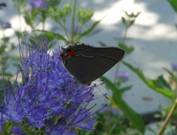
Blue mist shrub, ‘Dark Knight’ |
Caryopteris x clandonensis hybrid |
Not native, summer blooms, very attractive to butterflies and bees; spreads by suckers |
Larval source (amongst others) for yellow bear caterpillars |
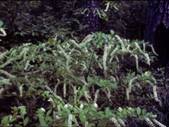
Perennials
Plant |
Common Name |
Scientific Name |
Description |
Wildlife Use |
|
White wood aster, ‘Eastern Star’ |
Aster divarticus, aka Eurybia divaricate |
White, fall flowers, Native to NC and east US, likes part shade, acid soil |
Nectar; Larval for Saddleback caterpillars, Pearl Crescent butterflies, Confused Euscarca moth, Camouflaged Looper, Common tan wave, Common pug, Dark Spotted Palthis moth, several Cucullia moths, several Flower moths, and others. |
|
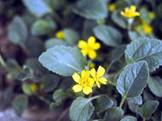
Green and gold |
Chrysogonum virginianium |
Groundcover, yellow flowers Apr-Oct; native to NC and SE US |
Nectar. Larval for Saddleback caterpillars, Pearl Crescent butterflies, Confused Euscarca moth, Camouflaged Looper, Common tan wave, Common pug, Dark Spotted Palthis moth, several Cucullia moths, several Flower moths, and others. |
|
Lobed coreopsis “pinwheel” |
Coreopsis auriculata hybrid |
Yellow, spring and summer flowers; basal rosette leaves last through winter; native to NC and SE US; this cultivar has larger, longer lasting flowers than original |
Nectar, seeds for birds; ; Larval for Saddleback caterpillars, Pearl Crescent butterflies, Confused Euscarca moth, Camouflaged Looper, Common Tan Wave, Common Pug, Dark Spotted Palthis moth, several Cucullia moths, several Flower moths, and others. |
|
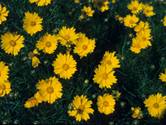
Threadleaf coreopsis |
Coreopsis verticillata |
Yellow, summer blooms; native to NC and SE US ; drought tolerant’ leaves narrow |
Nectar; birds love seeds; ; Larval for Saddleback caterpillars, Pearl Crescent butterflies, Confused Euscarca moth, Camouflaged Looper, Common Tan Wave, Common Pug, Dark Spotted Palthis moth, several Cucullia moths, several Flower moths, and others. |
|
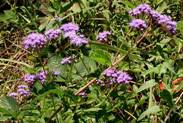
Blue mistflower |
Conoclinium coelestinum, previously Eupatorium coelestinum |
Blue-purple flowers, summer to fall, native to NC and East US; can spread aggressively; |
Nectar; Larval for many Haploa moths, for the Yellow-winged Pareucheutes moth, the Virginia Tiger moth, and others. |
|
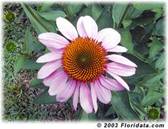
Purple coneflower, several color cultivars in the garden |
Echinacea purpurea |
Native to East US, incl. NC; summer blooms, long lasting; finches love the seeds |
Nectar, hummingbirds, seeds; Larval for saddleback caterpillars, pearl crescent butterflies, Confused Euscarca moth, Camouflaged looper, Common tan wave, Common pug, Dark spotted palthis moth, several Cucullia moths, several Flower moths, and more |
|
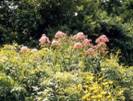
Sweet Joe-pye Weed |
Eupatorium purpureum |
2-6 ft, blooms July-Sept; Native eastern US incl. NC` |
Nectar; honey; |
|
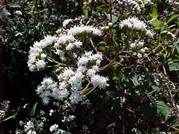
Chocolate boneset; ake chocolate Joe-pye weed; aka chocolate white snakeroot |
Eupatorium rugosum “chocolate”; aka Ageratina altissima “chocolate” |
White flowers, brown foliage; blooms in fall; spreads and self sows with original boneset speciesl |
Nectar; Larval for many Haploa moths, for the Yellow-winged Pareucheutes moth, the Virginia tiger moth, and others. |
|
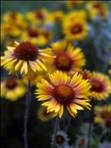
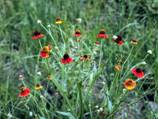
Blanket flower |
Gaillardia aristata |
Summer, long lasting blooms, red and orange flowers |
Nectar source a favorite of butterflies and skippers |
|
Purple headed sneezeweed |
Helenium flexuosum |
Red, mid-late summer bloom; doesn’t make people sneeze; native to NC and east US |
Nectar; Larval for Saddleback caterpillars, Pearl Crescent butterflies, Confused Euscarca moth, Camouflaged Looper, Common tan wave, Common pug, Dark Spotted Palthis moth, several Cucullia moths, several Flower moths, and others. |
|
Swamp sunflowers |
Helianthus angustifolius |
Very tall, yellow flowers in fall; native to NC and East US. |
Nectar and seeds; Larval for Silvery checkerspot, Common Pug, Common Looper, several Haploa moths, Virginia Tiger moth, Giant Leopard moth, and others. |
|
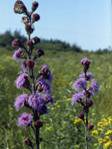
Rocky Mountain blazing star |
Liatris ligulistylis |
Late summer, purple blooms; native to midwest |
Nectar for butterflies and hummingbirds. |
|
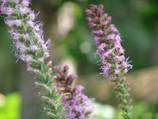
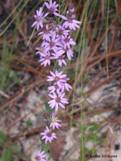
Gayfeather, dense blazing star, White dense blazing star, purple marsh blazing star |
Liatris spicata; Liatris spicata alba, Liatris spicata ‘Kobold’ |
Tall, slender perennial, purple or white; Native to east US, likes moist soil |
Nectar for butterflies and hummingbirds; May be larval for everything on Asters list. |
|
Prairie blazing star |
Liatris pycnostachya |
Summer, lavender blooms |
Nectar for butterflies and hummingbirds. |
|
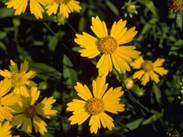
Orange coneflowers |
Rudebeckia fulgida |
Orange-yellow, summer to fall blooms, native to NC and east US, self sows readily |
Nectar; seeds for birds; Larval for Saddleback caterpillars, Pearl Crescent butterflies, Confused Euscarca moth, Camouflaged Looper, Common tan wave, Common pug, Dark Spotted Palthis moth, several Cucullia moths, several Flower moths, and others. |
|
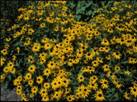
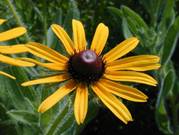
Black-eyed susans |
Rudebeckia hirta |
Yellow, summer blooms, biennial, self sows, summer to fall blooms, native to NC and most of US |
Nectar, seeds for birds; Larval for Saddleback caterpillars, Pearl Crescent butterflies, Confused Euscarca moth, Camouflaged Looper, Common tan wave, Common pug, Dark Spotted Palthis moth, several Cucullia moths, several Flower moths, and others. |
|
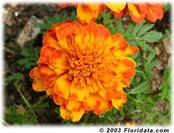
Marigolds |
Tagetes spp. |
Not Native. Yellow to orange, small flowers, planted between many of the native plants. |
The scent of marigolds is said to drive away insect pests as well as deer. The flowers are a larval source for Tobacco Budworms, and they serve as a nectar source. |
|
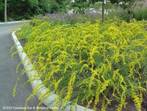
Goldenrod ‘solar cascade’ |
Solidago shortii hybrid |
Yellow cascades, summer, knee high; original species is native to midwest and is becoming rare, this hybrid is a new strain |
Nectar; Larval for Small Purplish Grey and Bent-line Grey caterpillars, Confused Eusarca moth, Blackberry and Camouflaged loopers, Common Tan Wave, Common Pug, , Dark spotted palthis moth, several Cucullia moths, several Flower moths, and others. |
|
Eastern silvery aster |
Symphyotrichum concolor |
White-lavender fall flowers, native to NC and eastern US |
Nectar; Larval for Saddleback caterpillars, Pearl Crescent butterflies, Confused Euscarca moth, Camouflaged Looper, Common tan wave, Common pug, Dark Spotted Palthis moth, several Cucullia moths, several Flower moths, and others. |
|
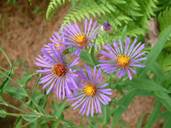
New England Asters |
Symphyotrichum novae-angliae |
Purple fall blossoms, native to NC and east US |
Nectar; Larval for Saddleback caterpillars, Pearl Crescent butterflies, Confused Euscarca moth, Camouflaged Looper, Common tan wave, Common pug, Dark Spotted Palthis moth, several Cucullia moths, several Flower moths, and others. |
|
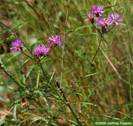
Tall ironweed |
Vernonia angustifolia |
Purple flowers, summer to fall blooms, native to NC and SE Us |
Nectar; Larval for Saddleback caterpillars, Pearl Crescent butterflies, Confused Euscarca moth, Camouflaged Looper, Common tan wave, Common pug, Dark Spotted Palthis moth, several Cucullia moths, several Flower moths, Virginia Tiger Moth and others. |
|
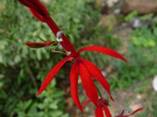
Cardinal flower |
Lobelia cardinalis |
Red flowers in spikes, May-Oct; native to NC and East US, likes very moist or wet soil |
Hummingbirds and butterflies with long proboscis such as cloudless sulphurs |
|
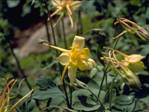
Golden columbine |
Aquiegia chrysantha |
Yellow, spring and summer blooms, monoecious, native to SW US, naturalized in NC |
Early spring nectar; Larval to columbine leaf miners |
|
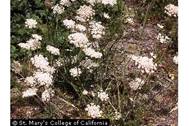
Queen Anne’s lace |
Dauca carrota |
Native to Europe but naturalized since early settlers arrived; white blooms second year; biennial, |
Larval for black swallowtails |
|
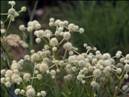
Rattlesnake master |
Eryngium yuccifolium |
Interesting, globe-shaped spiky flowers, architectural interest |
Nectar; may be larval for black swallowtails |
|
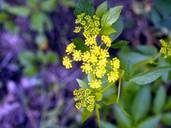
Golden Alexanders |
Zizia Aurea |
Yellow, spring to summer blooms; native to NC and most of US |
Larval for Black swallowtails |
|
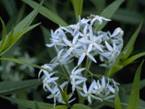
Narrow leaf bluestar, Hubricht’s bluestar |
Amsonia hubrectii |
Fall foliage, small blue spring flowers; Native to Oklahoma and Arkansas; |
Larval source for snowberry hummingbird moths, purple-lined sallows, blackberry loopers, striped garden caterpillars, several Cycnia moths, and others |
|
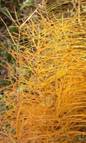
Eastern bluestar, Blue dogbane |
Amsonia tabernaemontana |
Spring blooms, blue flowers, large multi-stemmed clumps; Yellow fall foliage; native to NC and east US |
Larval source for Snowberry Hummingbird moths, Purple-lined Sallows, Blackberry loopers, Striped Garden caterpillars, several Cycnia moths and others |
|
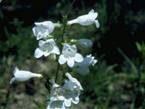
Mississippi penstemon |
Penstemon digitalis |
White flowers, summer blooms; native to NC and east US, self sows |
Nectar; hummingbirds love it. Larval for the Purple-lined Sallow and others. |
|
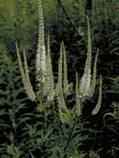
Culver’s Root |
Veronicastrum virginicum |
White, summer blooms, very tall spiked flowers, powerful emetic and laxative if eaten; Native to NC and east US |
Nectar. |
|
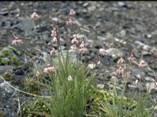
Nodding onion |
Allium cernuum |
Small perennial, native to NC and East US; bulb; |
Particularly attractive to hairstreak butterflies; Larval to Convict caterpillar |
|
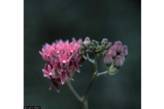
Red milkweed
|
Asclepias rubra |
Pink flowers, summer; native to NC and east US |
Nectar; larval for Monarchs and Queens, and Milkweed Tussock Moths |
|
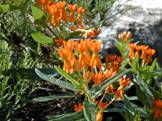
Butterfly weed |
Asclepias tuberosa |
Orange, summer bloom, native to NC and US |
Nectar; Larval for Monarch and Queen butterflies, and Milkweed Tussock and Unexpected Cycnia Moths. |
|
Whorled milkweed |
Aslepias verticillata |
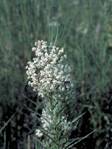
White, summer flowers, native to NC and east US |
Nectar; larval for Monarchs and Queens, and Milkweed Tussock Moths. |
|
Anise hyssop, blue giant hyssop |
Agastache foeniculum, |
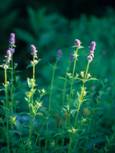
Summer blooms, native to Midwest, north east US, Canada; likes dry, sunny areas |
Nectar ttracts bees, butterflies and hummingbirds; Larval for Hermit sphinx moth and Virginia tiger moth. |
|
Licorice Hyssop |
Agastache rupestris, |
Summer blooms, full sun, okay in poor soil, drought tolerant; native to SW United States, mint family |
Great nectar source; a favorite of hummingbirds, deer resistant; Larval for Hermit sphinx moth and Virginia tiger moth |
|
Bee balm |
Monarda didyma |
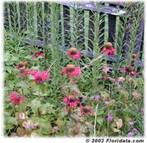
Several colors planted in garden, summer blooms, native to NC and most of US |
Nectar; hummingbirds; Larval for Hermit Sphinx moth and Virginia tiger moth and others. |
|
Blue perennial salvia; Pitcher sage, Big blue sage. |
Salvia azurea |
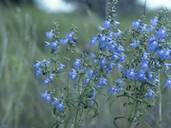
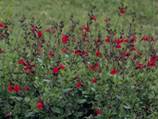
Tall, delicate plant with blue fall flowers; native to NC and east US (rare in Piedmont of NC) |
Nectar; Larval for camouflaged looper, yellow bear, Hermit sphinx moth |
|
Autumn Salvia “Cherry Chief” |
Salvia greggi |
Bicolor magenta:red flowers in late spring into summer; perennial; native to SW US |
Nectar; hummingbirds, butterflies and bees; Larval for Camouflaged Looper, Yellow Bear/Virginia Tiger moth, Hermit Sphinx moth and others. |
|
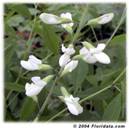
White wild indigo |
Baptisia alba |
Native to SE US, incl. NC; likes dry sandy soil like longleaf pine savannahs; spring blooms |
Nectar; Larval for the wild indigo duskywing, silver spotted skipper, hoary edge skipper, Henry’s elfin, Black spotted prominent |
|
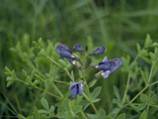
Blue False indigo |
Baptisia australis |
Bushy, can turn into tumbleweed in the fall, blue spring and summer flowers; native to NC and east US |
Nectar; larval for the wild indigo duskywing, silver spotted skipper, hoary edge skipper, Henry’s elfin, Black spotted prominent |
|
White moss phlox, ‘Snowdrift’ |
Phlox nivalis |
White spring flowers in May, native to NC and SE US. |
Nectar. |
|
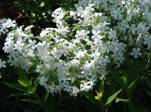
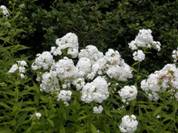
White garden phlox |
Phlox panniculata ‘David’ |
White flowers in mid-summer, native to NC and east US |
Nectar. |
|
Virginia Spiderwort |
Tradescantia virginiana |
Purple flowers, spring to summer; native to NC and most of US. Leaves irritating to skin |
Nectar; Larval to Convict Caterpillar |
|
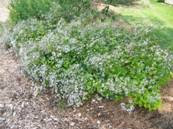
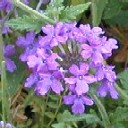
Trailing purple verbena ‘Homestead’ |
Verbena Canadensis |
Creeping perennial groundcover, spreads aggressively, dark purple blooms from Feb-Sept, native to NC and most of US |
Early nectar in spring; not deer resistant; Larval for Common Looper and others. |

Volunteers/Beneficial weeds
Plant |
Common Name |
Scientific Name |
Description |
Wildlife Use |
|
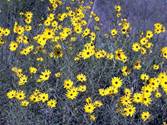
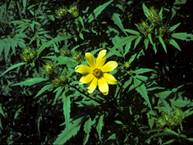
Bearded beggarticks, Tickseed sunflower, “Ditch daisies” |
Bidens aristosa (Aster family) |
Commonly seen along roadsides in late summer to early fall, native to NC and east US, seeds have prickles and catch on your socks |
Nectar is a favorite of butterflies and bees; seeds are eaten by birds; Larval for Northern Cloudywing, Long-tailed Skipper and Hoary Edged Skipper, and Purple Lined Sallow moth, and others. |
|
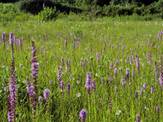
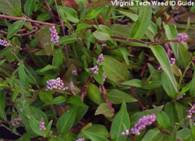
Smartweed, Tufted knotweed |
Polygonum caespitosum |
Flowers in 2-3 inch spikes, light pink, native to NC and most of east US, found in moist waste areas and fields |
Nectar; seeds for birds; Larval for Smartweed caterpillar; and Cross-lined Wave caterpillar and others. |
|
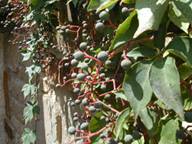
Virginia creeper |
Parthenocissus quinquefolia |
Vine, summer small green flowers, fall berries; often found in same habitats as poison ivy, it is not harmful in any way. |
Berries for birds; larval for Pandora and White-lined Sphinx moths and others. |
Vines
Plant |
Common Name |
Scientific Name |
Description |
Wildlife Use |
|
Climbing Aster |
Ampelaster carolinianus |
Vine, fall blooming, lavender-pink flowers; native to NC and SE US |
Nectar; Larval for Saddleback caterpillars, Pearl Crescent butterflies, Confused Euscarca moth, Camouflaged Looper, Common tan wave, Common pug, Dark Spotted Palthis moth, several Cucullia moths, several Flower moths, and others. |
|
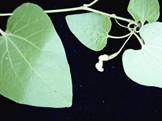
Dutchman’s pipe |
Aristolochia tomentosa |
Vine; Heart shaped leaves, dark maroon, pipe shaped flowers in the spring; |
Larval for Pipevine and Palamedes Swallowtails. |
|
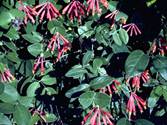
Coral honeysuckle |
Lonicera semervirens |
Evergreen vine, early summer bloom, native to NC and east US, large flowers |
Nectar for hummingbirds and butterflies; fruits for finches and thrushes; Larval host for Spring Azure and Snowberry Hummingbird moth and others. |
|
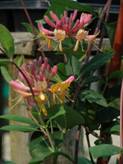
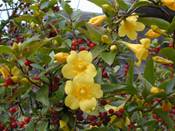
Goldflame Honeysuckle |
Hybrid of Lonicera sempervirens and Lonicera Americana; |
Vine; early summer bloom; its parent species are native to eastern US |
Nectar for hummingbirds and butterflies; fruits for finches and thrushes; Larval host for Spring Azure and Snowberry Hummingbird moth and others. |
|
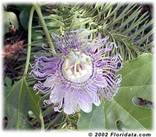
Passionflower, Maypops |
Passiflora incarnate, (Passionflower family) |
Vine; deciduous, found along ditches in SE US; has tendrils and suckers, grows fast |
Nectar; Larval for Gulf Fritillary and Variegated Fritillary; and Trumpet-vine Sphinx moth and others. |
|
Carolina Jessamine |
Gelsemium sempervirens |
Vine, evergreen, large, yellow trumpet shaped fall – early spring flowers, toxic to eat foliage or flowers, native to NC and SE US |
Nectar for butterflies and hummingbirds. |