Why Butterflies?
- Butterflies are important pollinators! Our garden also helps pollinators like bees and moths.
- Pollinators are crucial to the environment because many plants need them to reproduce. Most of the ecosystems on the earth would collapse if all the pollinators were to die out.
- Pollinators are important to humans, too- many human crops also need them to survive. One in every three bites of food comes from pollinators!
- Butterflies and caterpillars are food for many animals.
- Butterflies are beautiful!
Common Butterflies of Chapel Hill
In the tables that follow you will find photos and information about all of the common species of butterflies and skippers of Chapel Hill. It does not include uncommon or rare species that you are unlikely to find in our garden, or species that may be common in other parts of North Carolina. The photos are linked to a wonderful website, “Butterflies of the Carolinas and Virginia”, created by Randy Emmit, and we’d like to thank him for allowing us to use his photos and information for our project.
By clicking on the family name below, you will go to the table of species for that family. Click on the photo of a species to get larger images and more information.
Skippers
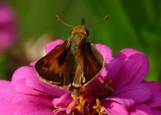
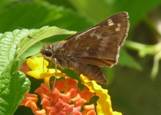
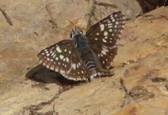
Skippers are not technically butterflies at all, but a group separate from both butterflies and moths. They are small,fluttering around rapidly, usually near the ground, and most are some shade of orange or brown. Their bodies are generally fuzzy and wide, similar to those of moths, but they have clubbed antennae, similar to those of true butterflies. Grass skippers rest with their wings up, or partially folded, whereas spread-wing skippers rest with them spread open.
 |
 |
 |
Gossamer Winged Butterflies
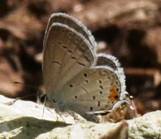
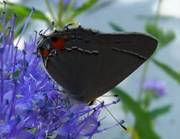
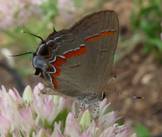
Gossamer Wings are small butterflies, generally brightly colored, who often have an antenna-like tail on the back of their wings, often complete with “eyes”, thought to be a device to confuse predators. The group includes the Blues, the Hairstreaks, the Elfins, the Coppers, and the Harvesters.
 |
 |
 |
Brush-Foot Butterflies
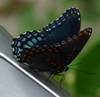
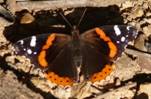
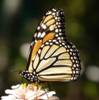
This is a large family of butterflies whose first pair of legs is very reduced, giving them the appearance of having only four legs. They can be small, medium or large butterflies, and many species in this group migrate. Milkweed butterflies are brush-foots, including monarchs, whose caterpillars feed on milkweed to make them toxic to birds. The group includes the Admirals, who are known for the adults preferring to eat sap flows and rotting fruit, and for the males to be seen “puddling”, that is, gathering necessary minerals from unusual sites. The brush-foots also include satyrs, small butterflies who usually have eyespots on their wings; emperors, larger butterflies who tend to favor tree sap for food, fritillaries, who tend to be orange, brightly marked butterflies, and many others.
 |
 |
 |
 |
 |
Swallowtail Butterflies
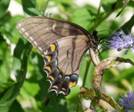
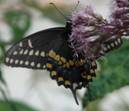
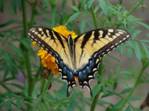
Swallowtails are medium to large butterflies distinguished by the protuberances on their hindwings – the “swallow-tails”. They all have multiple generations and adults are found in Chapel Hill from spring through fall, often flying in the trees. They are amongst our most well-known butterflies.
 |
 |
 |
Sulphurs and Whites
This group includes the medium sized yellow, orange and white butterflies seen flying in Chapel Hill in the summer and fall. Many of the sulphurs are hard to distinguish when their wings are folded, and often it is the flash of orange, yellow-green or lemon yellow when they are in flight that is the only clue to separate them. Some have a very long proboscis and favor deep, tubular flowers.
 |
 |